
The Lean Startup by Eric Ries – A Guide to Building Successful Ventures
folder_openBusiness, Productivity
commentNo Comments
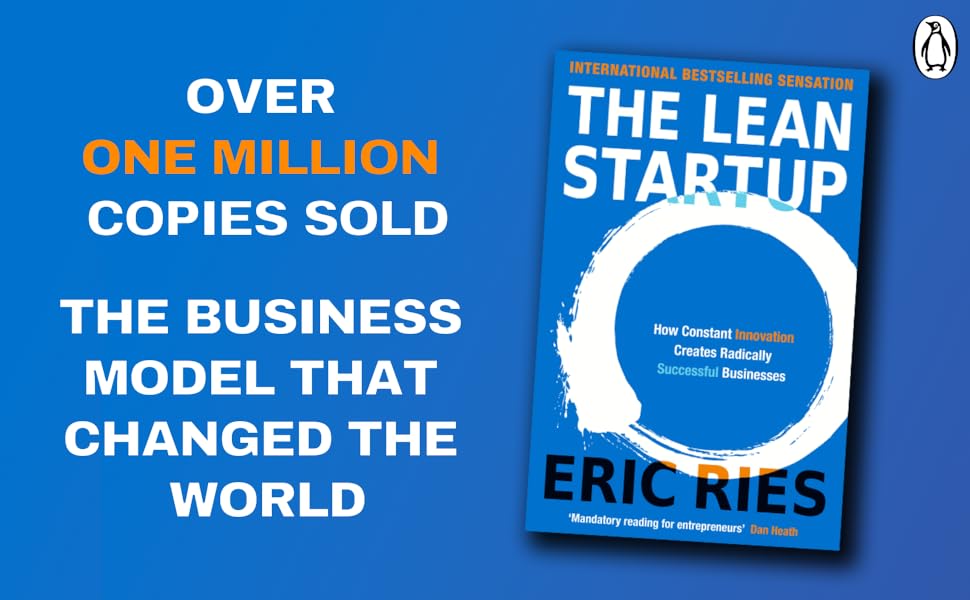
“The Lean Startup: How Constant Innovation Creates Radically Successful Businesses“ by Eric Ries is a ground-breaking book that has become a foundational resource for entrepreneurs and business leaders seeking to build successful and sustainable companies. In this review, we’ll explore the key concepts and principles presented in the book, providing an overview of Ries’ Lean Startup methodology.
Introduction – The Need for a New Approach
Eric Ries begins “The Lean Startup” by addressing the challenges that entrepreneurs and startups often face. He argues that traditional business models and management techniques are ill-suited to the rapidly evolving and uncertain landscape of the modern business world. Many startups fail because they invest significant time and resources in building products or services that nobody wants.
To address these issues, Ries introduces the Lean Startup methodology, which is inspired by lean manufacturing principles and agile software development. The Lean Startup approach is centred around the idea of continuous innovation, validated learning, and a focus on what Ries calls a “minimum viable product” (MVP). The goal is to build a sustainable business that can adapt and thrive in the face of uncertainty.

The Build-Measure-Learn Feedback Loop
At the core of the Lean Startup methodology is the build-measure-learn feedback loop. Ries encourages entrepreneurs to start by creating an MVP, which is the simplest version of their product or service that can be built quickly and with minimal resources. The MVP is then released to a small group of early adopters or customers.
Once the MVP is in the hands of users, the focus shifts to measurement and learning. Entrepreneurs gather data on how customers are using the product and what they like or dislike about it. This feedback is crucial for making informed decisions about whether to pivot (make a fundamental change to the product) or persevere (continue refining and expanding the current product).
Validated Learning and Pivot or Persevere
Ries emphasises the importance of validated learning, which means using data and customer feedback to test hypotheses and validate assumptions about the business. This approach allows entrepreneurs to make evidence-based decisions rather than relying on gut instincts or intuition.
One of the key concepts in “The Lean Startup” is the idea of “pivot or persevere.” When the data collected from the MVP indicates that the product is not meeting customer needs or that the business model is flawed, entrepreneurs should be prepared to pivot, making a strategic shift in a new direction. However, if the data shows positive signs and validates the core assumptions, entrepreneurs should continue to refine and expand the product.

The Three Engines of Growth
Ries introduces a framework for understanding the growth of a startup, which he calls the “Three Engines of Growth.” These engines are:
- The Sticky Engine of Growth: This engine focuses on retaining existing customers by improving the product and providing excellent customer service. The goal is to create a customer base that continues to use and recommend the product.
- The Viral Engine of Growth: In this engine, customers become advocates and spread the word about the product to others. Viral growth occurs when each new customer brings in more than one additional customer, leading to exponential growth.
- The Paid Engine of Growth: This engine involves spending money on marketing and advertising to acquire new customers. The goal is to have a positive return on investment (ROI) by acquiring customers at a cost lower than their lifetime value to the company.
Ries argues that startups should focus on one of these engines of growth, and each engine requires a different set of strategies and tactics. Startups should also be aware of the potential pitfalls and challenges associated with each engine.
Lean Thinking in Practice
Throughout the book, Ries provides numerous examples and case studies from real startups to illustrate the principles of the Lean Startup methodology in action. These examples showcase how companies have applied the build-measure-learn feedback loop, validated learning, and pivot or persevere decisions to achieve success.
Ries emphasises the importance of “validated learning over working software” and encourages entrepreneurs to prioritise learning and adaptation over blindly building and scaling their products. He also advocates for a focus on actionable metrics, which are metrics that provide insights and guide decision-making, rather than vanity metrics that simply look impressive but lack meaningful relevance.
Continuous Deployment and Split Testing
Another key aspect of the Lean Startup methodology is the concept of continuous deployment and split testing. Ries argues that startups should aim to deploy new features or updates to their product as frequently as possible. This allows for rapid iteration and learning. Split testing, or A/B testing, involves comparing two versions of a feature or webpage to determine which one performs better based on user data.
By continuously deploying small changes and using split testing, startups can make data-driven decisions and avoid making large, risky bets on untested ideas.
The Lean Startup in Established Organisations
While “The Lean Startup” is often associated with early-stage startups, Ries also discusses how established organisations can benefit from lean thinking. He introduces the concept of the “Innovator’s Dilemma,” which refers to the challenges large companies face when trying to innovate in the face of disruptive technologies or market changes.
Ries suggests that established companies can apply lean startup principles by creating “innovation engines” within their organisations. These engines operate with the same principles of validated learning, experimentation, and iterative development to foster innovation and adaptability.
Conclusion – Embracing a Leaner Approach
In “The Lean Startup,” Eric Ries presents a compelling argument for why traditional business practices are often ill-suited for today’s fast-paced and uncertain business environment. He offers a clear and practical methodology for entrepreneurs to build successful companies by prioritising validated learning, customer feedback, and continuous adaptation.
The book has had a significant impact on the startup ecosystem, inspiring countless entrepreneurs to embrace lean thinking and adopt a more scientific and evidence-based approach to entrepreneurship. By following the principles outlined in “The Lean Startup,” entrepreneurs and businesses can increase their chances of building products that customers truly want and creating sustainable, long-term success.


BUY NOW or LISTEN FOR FREE ON AUDIBLE
Also check out some of ELEVATE eBooks too:




SHOP
-
 ELEVATE 25 T-Shirt
Price range: £25.00 through £31.99
ELEVATE 25 T-Shirt
Price range: £25.00 through £31.99
-
 ELEVATE Bag - Black
£30.00
ELEVATE Bag - Black
£30.00
-
 ELEVATE Black Backpack
£40.00
ELEVATE Black Backpack
£40.00