
The Impact and Controversy of Robert Kiyosaki’s Rich Dad Poor Dad
folder_openMoney, Productivity
commentNo Comments

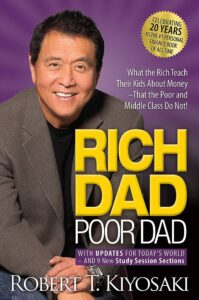
“Rich Dad Poor Dad: What the Rich Teach Their Kids About Money – That the Poor and Middle Class Do Not!” by Robert Kiyosaki is a personal finance classic that challenges conventional wisdom about money and investing. In this review we’ll explore the key lessons and concepts from the best-selling book.
Introduction – Two Dads, Two Different Approaches
“Rich Dad Poor Dad” begins with Robert Kiyosaki reflecting on his upbringing and the influence of two father figures in his life—his biological father (referred to as “Poor Dad”) and the father of his best friend (referred to as “Rich Dad”). These two men had vastly different philosophies about money, work, and wealth, and their teachings profoundly shaped Kiyosaki’s financial mindset.
Lesson 1 – The Rat Race and the Importance of Financial Education
Kiyosaki introduces the concept of the “rat race,” which represents the cycle of working hard to earn a salary, paying bills, and then starting the process all over again. He argues that most people are trapped in the rat race because they lack financial education and make poor financial decisions. According to Kiyosaki, the key to escaping the rat race is acquiring financial literacy and understanding the difference between assets and liabilities.

Lesson 2 – The Importance of Assets vs. Liabilities
Kiyosaki emphasizes the significance of distinguishing between assets and liabilities. He defines an asset as something that puts money in your pocket, while a liability takes money out of your pocket. Kiyosaki encourages readers to focus on acquiring income-generating assets such as real estate, stocks, and businesses, rather than accumulating liabilities like consumer debt and excessive expenses.
Lesson 3 – The Power of Entrepreneurship and Investing
“Rich Dad Poor Dad” underscores the importance of entrepreneurship and investing as paths to financial freedom. Kiyosaki argues that the wealthy understand how to use their money to make more money, whereas the middle class and poor tend to work solely for earned income. He encourages readers to think like investors and entrepreneurs by seeking opportunities to generate passive income and build wealth.
Lesson 4 – Building Financial Intelligence
Kiyosaki asserts that increasing one’s financial intelligence is essential for achieving financial success. This involves developing the ability to analyse investments, understand financial statements, and make informed decisions about money. He suggests that individuals should continually seek to expand their financial knowledge to make better financial choices.


Lesson 5 – The Importance of Mindset and Taking Risks
The book emphasises the role of mindset in achieving financial success. Kiyosaki argues that fear of failure often holds people back from taking risks and pursuing opportunities. He encourages readers to overcome their fear of making mistakes and to embrace financial education as a means of increasing their confidence in financial decision-making.
Lesson 6 – The Rich Invent Money
Kiyosaki challenges the notion that one needs a large sum of money to start investing. He suggests that the rich have a mindset of creating money through financial creativity and innovation. By using their financial intelligence, they can identify opportunities and create value, often with little to no money of their own.
Lesson 7 – The Importance of Taxes and Corporations
Kiyosaki discusses the impact of taxes on financial success and highlights the advantages of owning and operating businesses through corporations. He suggests that understanding the tax code and using legal tax strategies can significantly reduce tax liabilities and increase wealth.
Lesson 8 – The Five Key Financial Literacy Skills
In the book, Kiyosaki outlines five essential financial literacy skills that he believes are critical for financial success:
- Making Money Work for You – Understanding how to make money grow through investments and passive income streams.
- Protection – Learning how to protect your wealth through insurance and legal structures.
- Budgeting and Managing Money – Developing effective budgeting and money management skills.
- Understanding Markets – Gaining knowledge of financial markets, such as real estate, stocks, and commodities.
- The Power of Negotiation – Developing strong negotiation skills to secure better financial deals.
Lesson 9 – Working to Learn, Not to Earn
Kiyosaki encourages readers to prioritise learning and self-improvement over simply working for a salary. He suggests that working for a salary alone may limit one’s financial growth, while working to acquire new skills and knowledge can open up opportunities for financial success.
Conclusion – Achieving Financial Freedom
“Rich Dad Poor Dad” concludes with the idea that financial freedom is attainable for those who are willing to challenge their beliefs about money, invest in their financial education, and take calculated risks. Kiyosaki’s book serves as a call to action for readers to break free from the cycle of the rat race and pursue their path to financial independence.
Impact and Controversy
Since its publication, “Rich Dad Poor Dad” has had a significant impact on personal finance literature and has influenced countless individuals to reevaluate their approach to money and investing. It has also sparked debate and controversy, with some critics questioning the veracity of Kiyosaki’s anecdotes and the effectiveness of his advice.
Despite the controversy, the book’s core message—that financial education is key to achieving financial success—continues to resonate with readers seeking to improve their financial literacy and build wealth.
“Rich Dad Poor Dad” by Robert Kiyosaki challenges conventional wisdom about money and offers a different perspective on wealth-building. Its emphasis on financial education, asset acquisition, entrepreneurship, and a mindset shift toward wealth creation has inspired many to take control of their financial future. While not without controversy, the book’s impact on personal finance literature and the financial mindset of its readers cannot be denied.
BUY NOW or LISTEN FOR FREE ON AUDIBLE
Also check out some of ELEVATE eBooks too:



SHOP
-
 ELEVATE Purple Drawstring Bag
£35.00
ELEVATE Purple Drawstring Bag
£35.00
-
 ELEVATE Your World T-Shirt
£20.00
ELEVATE Your World T-Shirt
£20.00
-
 ELEVATE E Cap
£22.00
ELEVATE E Cap
£22.00