
How to Become Rich with Japanese Budgeting Method
folder_openMoney
commentNo Comments

Kakeibo, a century-old Japanese budgeting strategy, lets you spend more mindfully and save more without investing in any course or technology.
It’s a financial theory focusing on mindful, intentional spending and investing, not just a budgeting tool. This may sound lofty, but it’s incredibly easy to learn and adapt to your lifestyle.
Kakeibo devotees and promoters claim that consumers can save up to 35% on monthly expenses, and although you might not hit that target in the first month, you could be surprised by how much it could help you save. It gives you a greater understanding of your financial interests.
Aside from the cost of paper and ink, kakeibo is completely free. That said, what makes it so effective?
STEP 1: GET A PERSONAL LEDGER
Kakeibo maintains its early twentieth-century Japanese origins as it requires physical handwriting. Got a pen and paper handy? Bullet notebooks are convenient, but any notebooks that you can keep track of would suffice.
Next, subtract fixed costs from your monthly salary, and for this move, ensure you don’t use a calculator. Finally, set a savings target for the month which can ideally come from the money left after fixed costs like rent or mortgage, as well as electricity.
Also, listing all the different expense types is crucial. They comprise of Needs, Wants, Entertainment, and Miscellaneous.
STEP 2: CATEGORISE YOUR PURCHASES
So now that you’ve identified your different expenses, this next step includes you preparing a list of all your transactions, together with the total spent.
The sorting process in the ledger is often time the most beneficial aspect of kakeibo, so ensure it’s on point. It adds up to this step. When you try to sort something into a group, think about it more than you normally would. Separating needs from desires proves to be more difficult than you might expect.
STEP 3: REFLECTION
Last but not least, try being accountable to yourself by answering these questions regularly. It could be weekly or monthly depending on how often or how much you spend.
“What is my financial situation?”, “What is the amount of money I would like to save?”, “What is my monthly budget?”, “How can I improve?”
You’re encouraged to represent and personalise the response. Finding opportunities to cut expenses isn’t the only way to improve; it may also mean choosing to spend on something you love, saving on something you’re looking forward to, and less on something you don’t.
You may even work out how to avoid incurring unnecessary fees or how to add another income stream.
Worth noting, original Japanese kakeibo books included drawings of a “savings pig” battling a vicious “expenses wolf.” These graphics don’t complement your saving skills, but if you wish to get the complete experience, you can go for it.
WHY IT’S DIFFERENT
The fact that you have to handwrite your expenses helps you look at your expenses from a deeper angle. You always take a second thought, and since writing is linked to memory, it’s easy to keep tabs on your finances without constantly reviewing notes from your phone.
HOW IT HELPS YOU SAVE
Similar to spare change applications like Acorns and Stash, it encourages you to save money in small increments in a manner that is long-term sustainable. As you save, it gives you the motivation as you feel great about the progress you make.
It’s great for first-time savers, those using envelope budgeting methods, reluctant, and inconsistent budgeters.
Personal Budget Calculator
Check out some of our resources to help you with your finances






SHOP
-
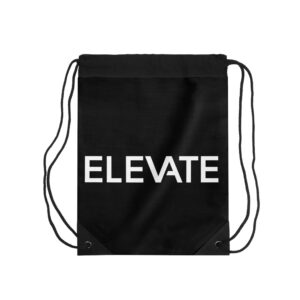 ELEVATE Black Drawstring Bag
£35.00
ELEVATE Black Drawstring Bag
£35.00
-
 ELEVATE Bag - Purple
£30.00
ELEVATE Bag - Purple
£30.00
-
 ELEVATE 19 Hoodie
£35.00
ELEVATE 19 Hoodie
£35.00